
 Engineered for craft
Human-augmented AI Delivery.
One connected system turns intent into production software—without dropping engineering judgement between stages.
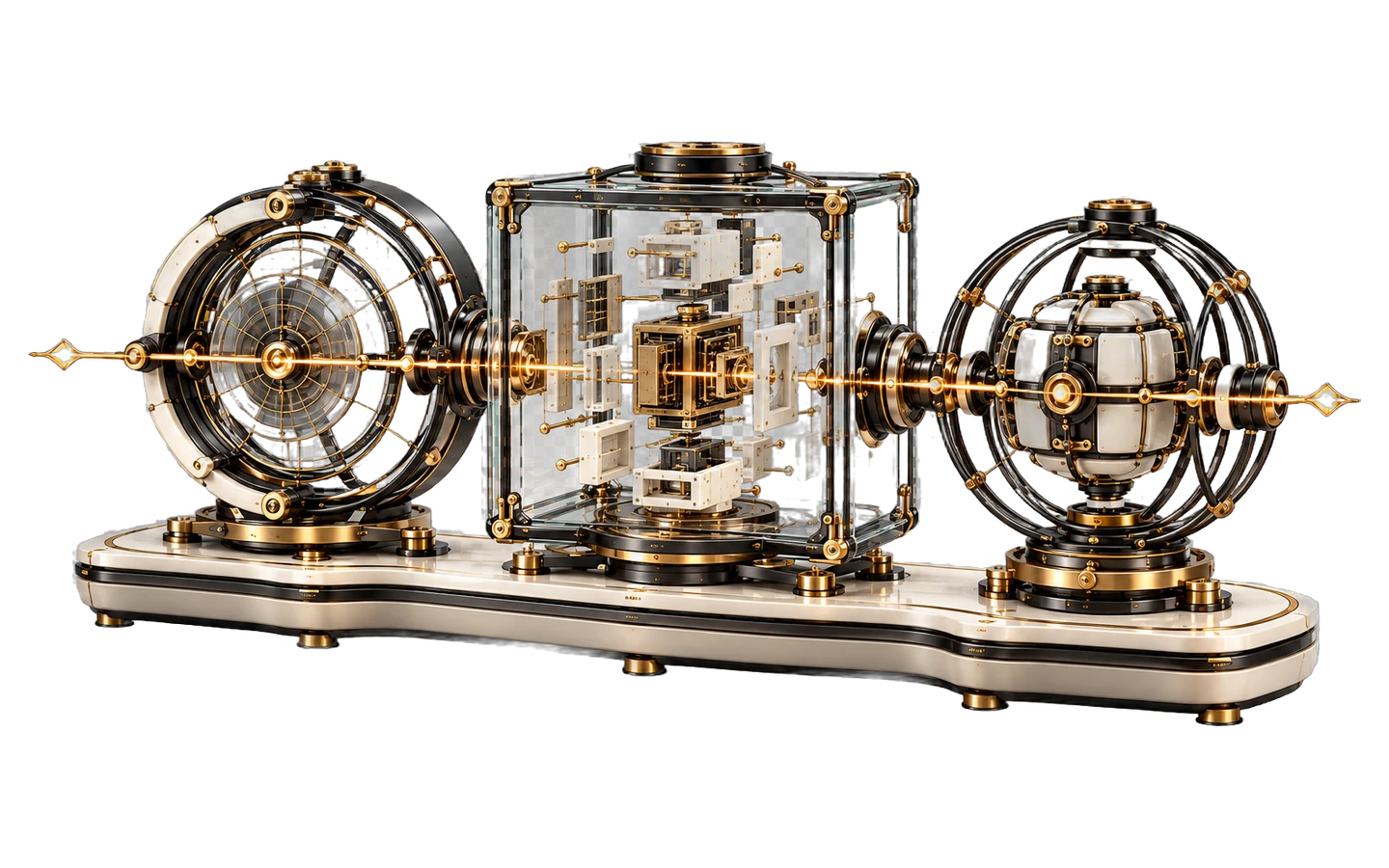
- 01Spec
- 02Tasks
- 03Build
- 04Guard
- 05Run
Production software
Engineering judgement connects intent to operation.
Today, building software with AI fails in two ways.
Both are common. Both are expensive. ZenForge is the third way.
Vibe-coded prototypes
Generated in app builders. Demoed in a meeting. Rebuilt the moment it has to ship.
- No real architecture
- No tests, no CI
- Data model lives in someone's head
- Path to production is "rebuild it"
Pyramid consultancies
Senior architects sell. Juniors build. AI bolted on the front. Same six-week SOWs.
- Slow specs, tribal standards
- Quality is a hope, not a pipeline
- AI accelerates the bottleneck
- AI does not remove the bottleneck
"We don't want vibe-coded prototypes."
"We don't want wrappers around foundational LLM APIs."
"We don't want to throw the demo away."
— Three sentences we hear in almost every CTO conversation.
Five stages on a context-engineered foundation.
The contract before the code
A reviewable tech spec lands in your repository — written by a senior architect, reviewed by an architecture board, signed off before any code is generated.
HLD + LLD
Architectural delta, data model, API contracts
CFRs as fields
Security, performance, observability, cost — first-class
In your repo
Plain markdown, version-controlled, pull-requested
Engineered context · Custom CLAUDE.md per repo · skills mapped to work areas · project rules enforced as code · standards that travel with the build. The moat.
Six things we don't compromise on.
The same standards from the first prototype to the hundredth feature.
Spec before code, every time.
Reviewable artifacts your team signs off on — before any code is generated.
CFRs are spec fields.
Security, performance, observability, cost — designed in, never retrofitted.
Senior engineers, augmented.
Every keystroke is a senior plus an agent. No offshore pyramid.
Real code from day one.
Even discovery work runs in your stack, your repo, your CI. No throwaway prototypes.
Engineered context, not vibes.
Skills, standards, project rules teach the AI to build your way, not generic-AI way.
Continuous review, automated.
Code, tests, logs, security reviewed weekly. Humans see the verdict, not the noise.
Multiple agents on the night shift.
Running weekly inside your CI/CD. Verdicts to humans. Noise stays in the agent. Software does not stop changing the day it ships.
Sample agents
Code review agent
Drift, dead code, security smells, debt accumulation.
CLEAN- 0 critical findings · 3 minor suggestions
- Standards adherence: 98% across 1,207 commits
- 2 deprecated imports flagged for cleanup
Test review agent
Coverage shape, brittle assertions, missing edges.
HEALTHY- Coverage held: 72% across touched modules
- No brittle assertions detected
- 4 edge cases recommended for new endpoints
Log review agent
Error spikes, latency regressions, cold starts.
NORMAL- No anomalies in 7-day window
- p95 latency stable: 184ms (within SLO)
- 12 cold-start events · within tolerance
Security review agent
Dependency CVEs, config drift, anomalous access.
SECURE- 0 high-severity CVEs in dependencies
- 0 config drifts from baseline
- 1 access pattern flagged for review
Agents do the scan. Humans approve, schedule, or escalate. The standing watch that keeps the system from quietly going stale.
What we build with AI.
Deep, hands-on expertise across every AI capability area that ships in production.
Foundational LLMs + cost engineering
Multi-model routing, prompt caching, multi-level agent caching, fallback chains, model-by-job selection. Costs measured per feature.
Agentic platforms + MCP
Supervisor + specialist agents, multi-turn routing, MCP-native tool servers, tool-calling at scale, multi-tenant isolation.
RAG and retrieval
pgvector / Weaviate, hybrid retrieval, eval harnesses, freshness controls, semantic chunking, ingestion pipelines.
Voice and multilingual
Production voice automation — call-centre AI shipped. Speech-to-text, text-to-speech. Multilingual NLP across 10+ languages.
LLM evals and observability
Token-cost tracking, latency SLOs, regression suites, drift detection, golden-dataset evals, per-feature cost dashboards.
AI safety and guardrails
Content moderation, prompt-injection defence, RBAC-aware tool calls, audit trails, tier-gated capability rollouts.
And custom ML when LLMs aren't the answer.
Rule-based + LLM-fallback patterns. Classical models for deterministic precision — file parsing, deduplication, classification, anomaly detection. We choose the model class to fit the problem, not the trend.
From the right question to a product you can trust.
ZenSpark shapes the brief. ZenForge turns it into software. ZenQraft brings quality evidence into the journey—from requirements through operation.
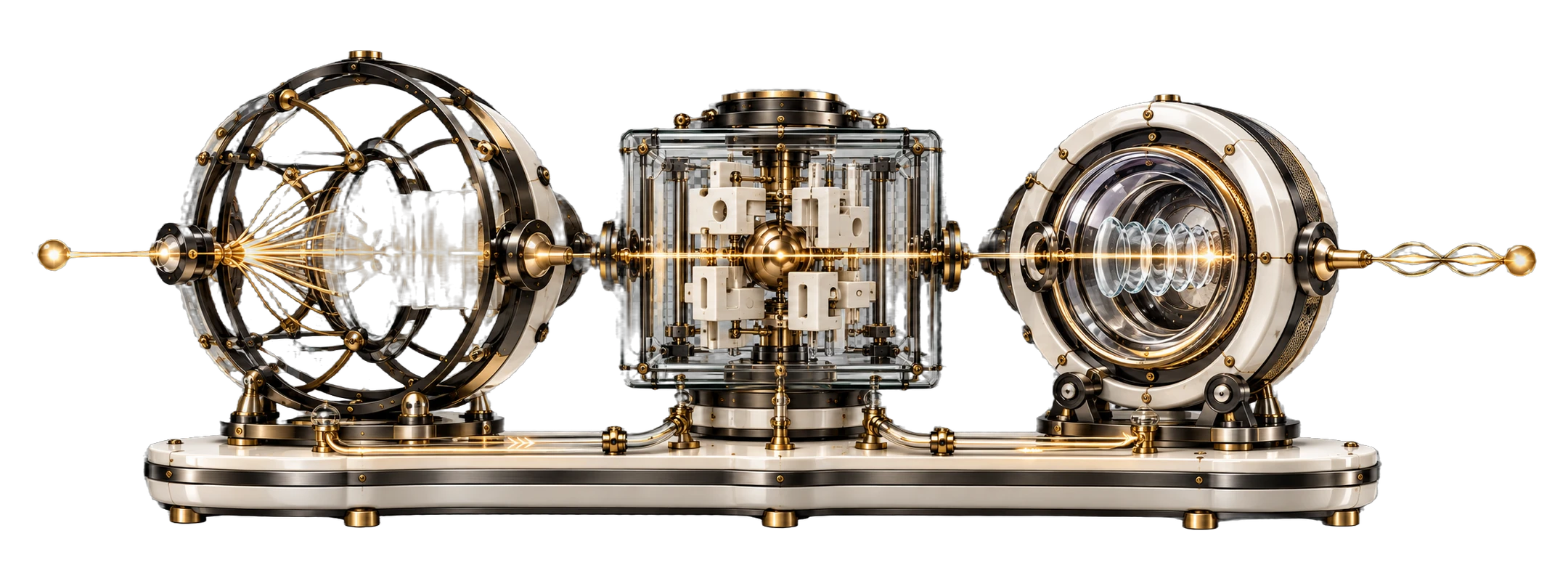
- 01
ZenSpark
Discovery
Research the problem, resolve scope and make functional and cross-functional requirements explicit. The product owner approves the decisions.
- Input
- Intent, context and constraints
- Output
- A decision-complete brief
- 02
ZenForge
Core design and implementation
Translate the brief into specifications and tasks, build with engineers in the loop, review changes and carry the system into production.
- Input
- The approved brief
- Output
- A working, operable product
You are here · ZenForge
- 03
ZenQraft
Quality
Assess risk, shape the testing strategy and automate the right checks. Keep that evidence current as the product and its operating conditions change.
- Input
- Requirements, risks and the system
- Output
- Test evidence and release confidence
The result: a shared thread from product intent to release evidence, with explicit decisions, reviewable changes and feedback that improves the next iteration.
Send us your hardest feature.
We will send back a reviewed spec in five days.